Water is a valuable commodity, and as a whole we must improve the way in which we use it and conserve its supply whenever possible. With improved plumbing system design, and the move away from baths to showers, use of low quantity flush sanitary appliances, and water saving taps being a priority in all new homes.
Rainwater harvesting is the term given to the collection, storage and distribution of rainwater which falls onto our buildings roofs.
The highest quality water we require within our homes and places of work is that of drinking water, also known as “potable water”. Potable water supplied to our homes via the water mains infrastructure and ultimately from our reservoirs is expensive to produce and becoming scarcer. I think most people over the age of 20 can recall summer droughts and water restrictions, yet we waste in the region of 60% of this top-quality potable water in areas that don’t require it. Flushing toilets, washing machine use, car washing, and light garden watering consume 60% of our total water intake.
Harvesting rainwater makes both environmental and economic sense, after all rainwater is free! and every litre harvested is a litre that does not go through the water meter saving money.
If all new homes were fitted with a rainwater harvesting system, it would benefit the community as a whole, huge amounts of energy would be saved, thus reducing the cost of water purification, reservoirs would not require extending and the environmental impact would be reduced. Also, less chemicals would be needed, and the risk of flash flooding and storm water management would be reduced.
On a commercial basis large store of harvested water can be used to great advantage in hotels, schools, laundry’s, factories and any number of other commercial activities that use large amounts of non potable water. For one large hotel we have designed a system that actually produces the majority of its domestic hot water by extracting the latent energy entrained within the harvested water before its used within the hotel, see commercial section on this site.
The rainwater that falls onto our roofs is generally a soft water, thus it is easier on appliances and upon the environment. Having little or no calcium, plumbing valves do not clog up and it has causes little or no corrosion to brass and copper plumbing pipes and fittings.
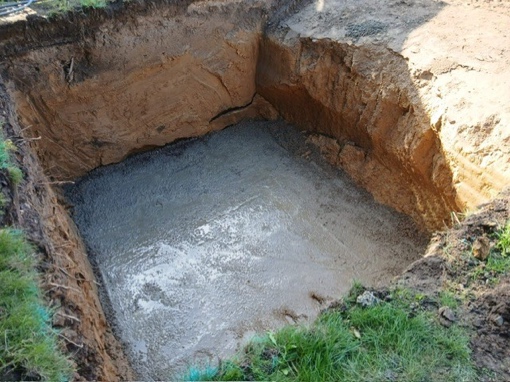
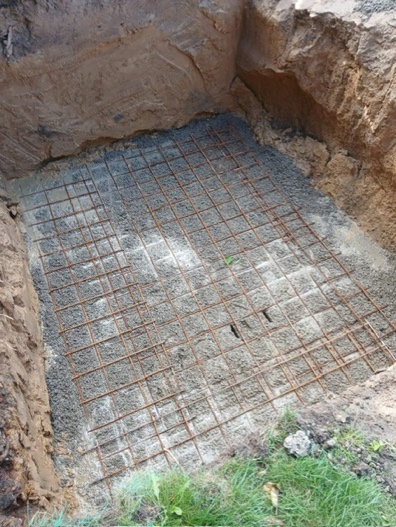
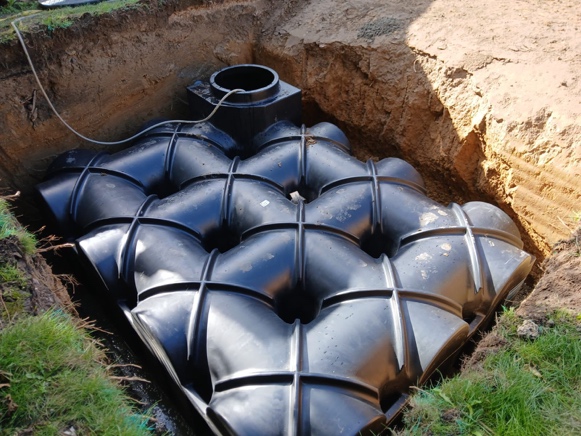
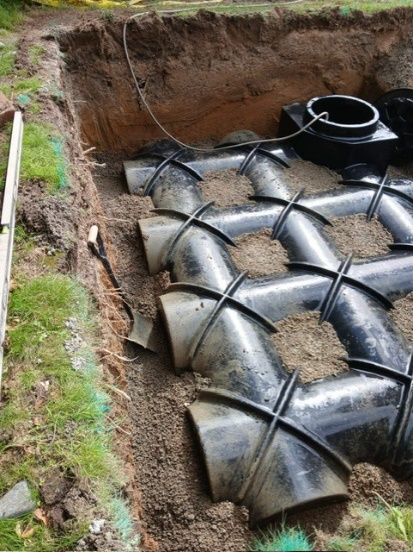
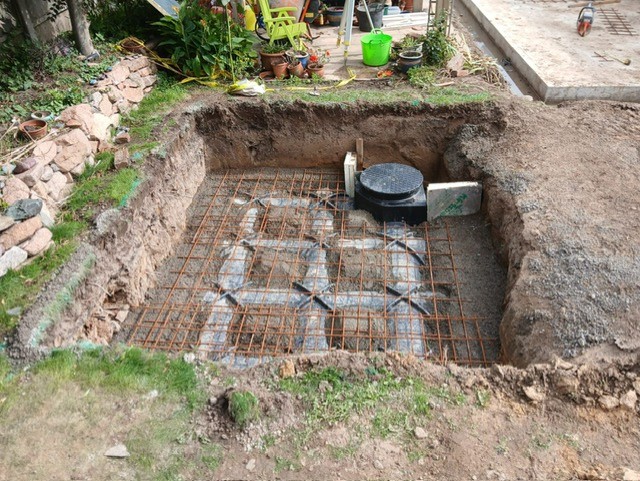
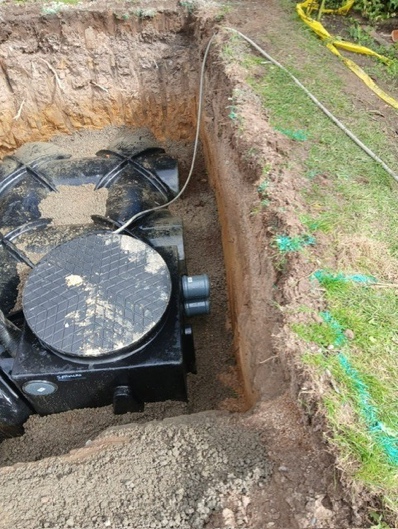
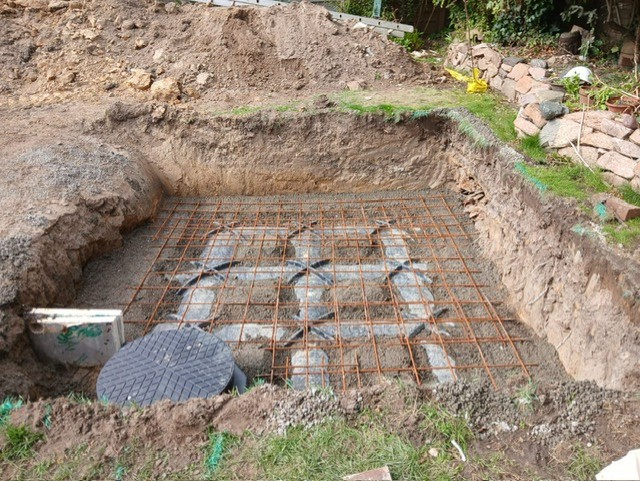
Rainwater harvesting technology is relatively simple. The rain that falls onto the roof is collected by the gutters and is channelled to a harvesting tank, usually underground, but not essentially so. All debris and leaves are automatically filtered out by a simple not mechanical backwash system in the tank, allowing only the clean water to enter the tank.
Within the tank is a floating suction line that is set about 300mm (12″) above the base of the tank, this allows for the fine sediments to settle to the bottom and stored water to be drawn off without the risk of stirring up the fines at the base of the tank. The water enters the small water booster tank, this is usually located in a nearby garden shed or the garage, and from here is pushed under pressure from the pump into the building by a network of dedicated water pipes that supply the toilets, washing machine and garden taps.
The booster tank also has a small independent mains water fed reservoir, just in case during sustained drought periods the harvesting water runs out of stored water. A simple float within the main harvesting tank signals the booster that the water is low and automatically the mains water fed top-up tank is brought into operation until the float assemble tells the booster tank that after rainfall normal conditions have returned.
There is no limit to the capacity of the harvesting system and commercial installations stand to make huge savings typically due to the larger catchment areas available and the greater demand for water.