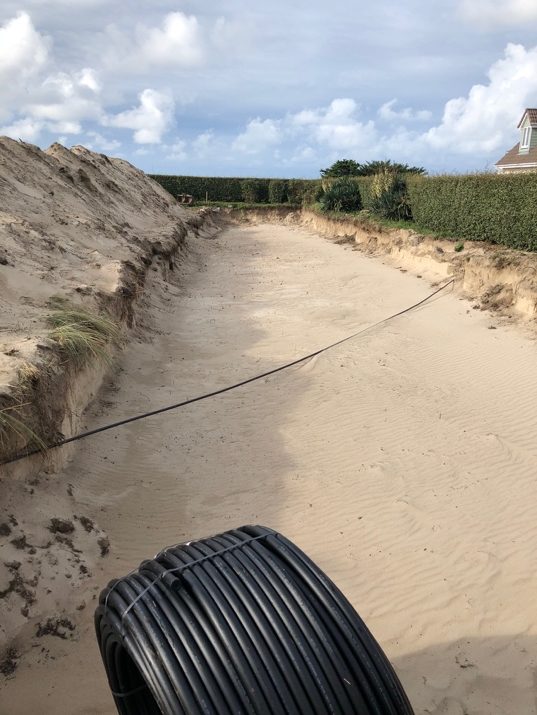
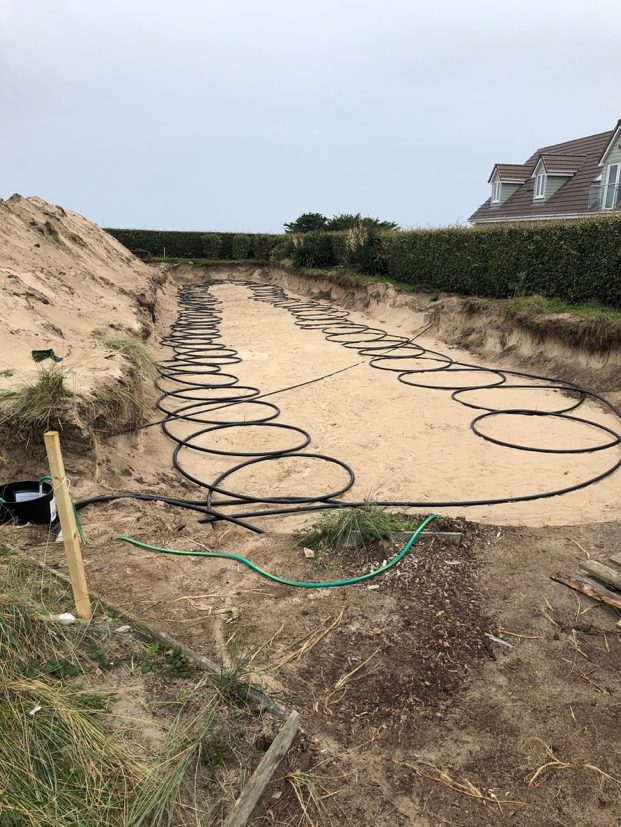
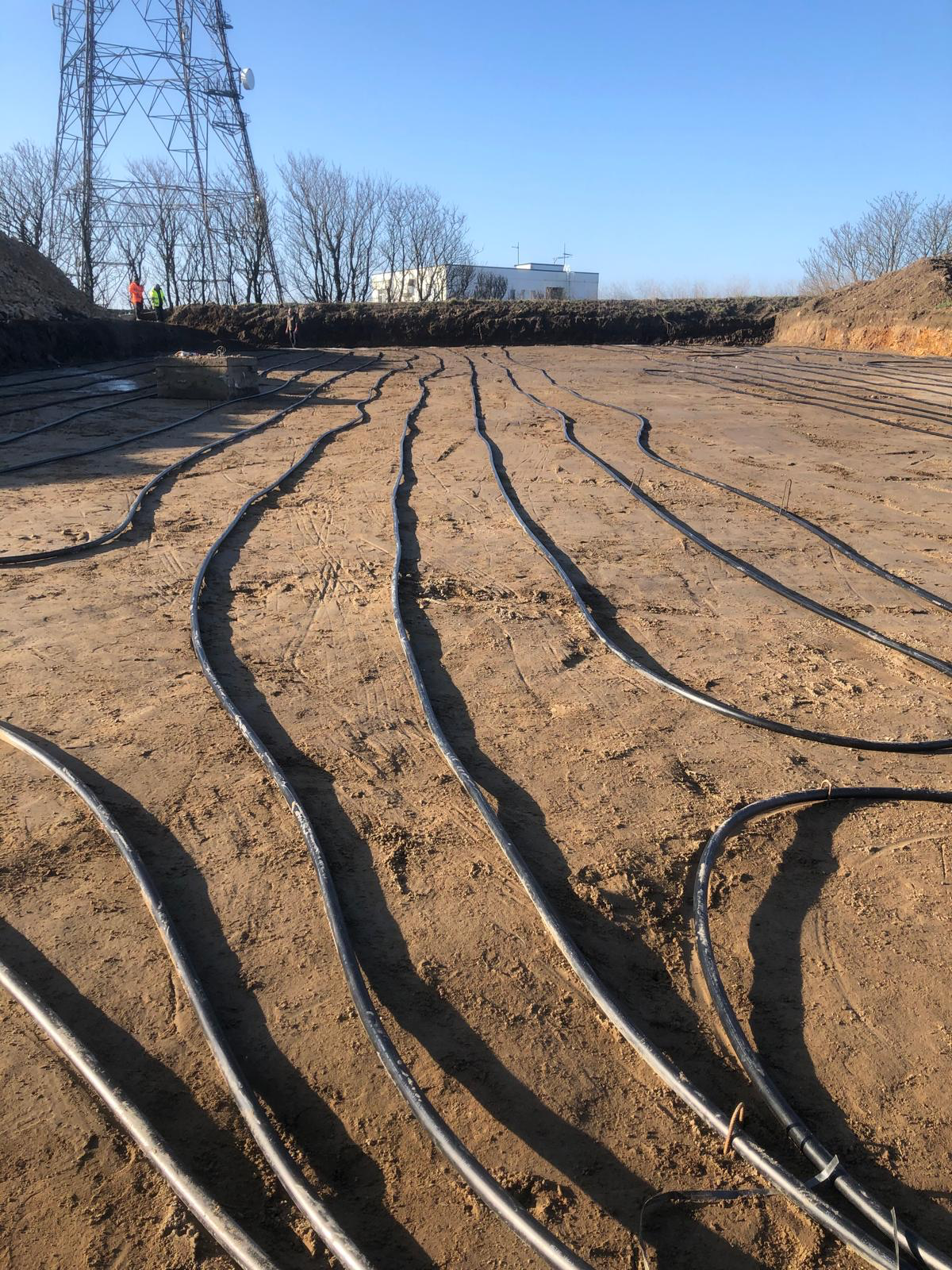
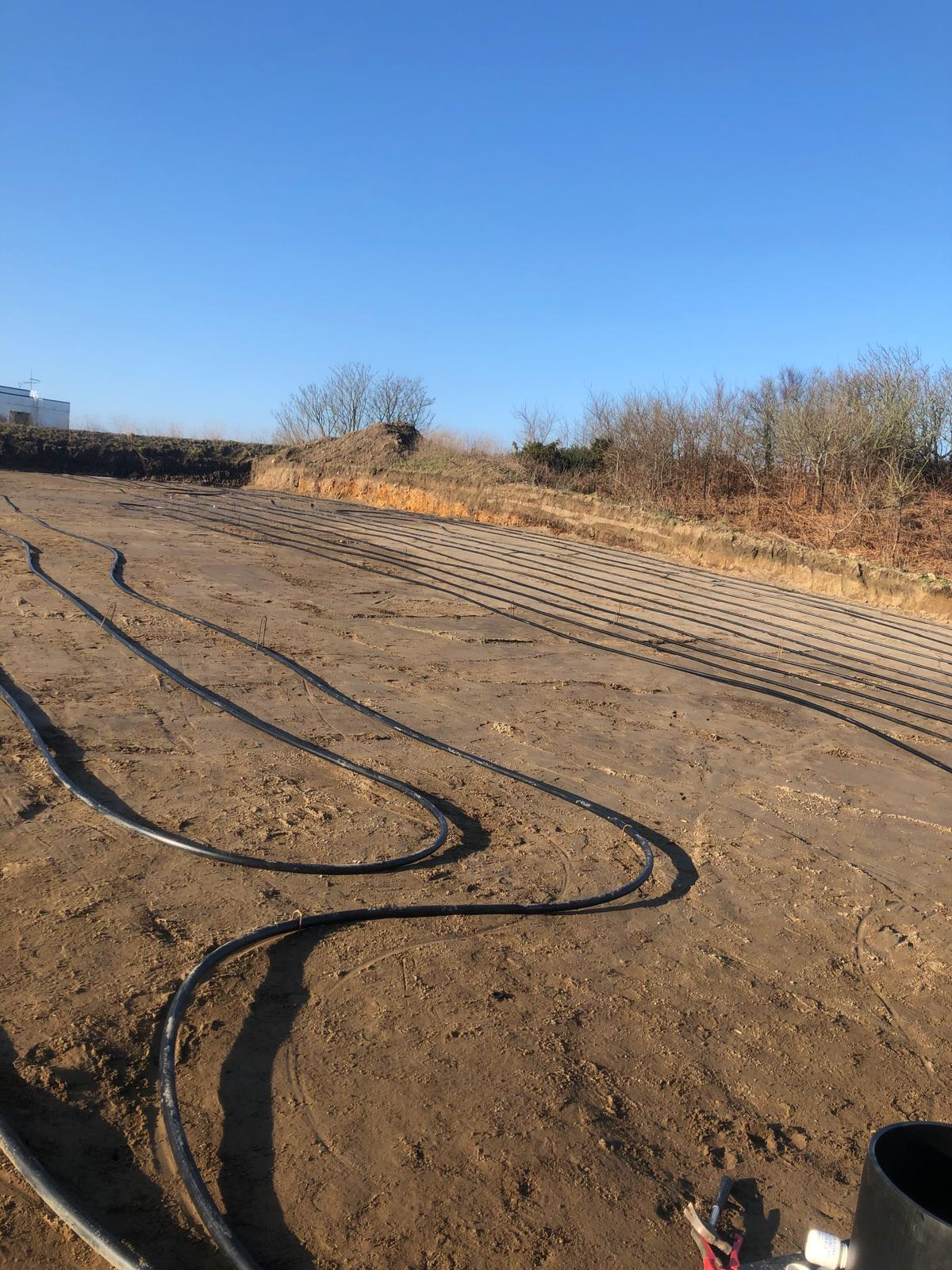
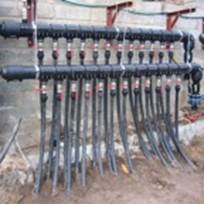
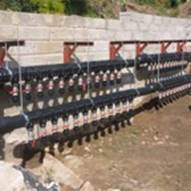
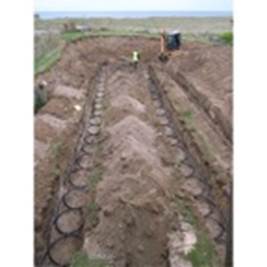
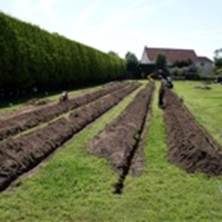
Ground source heat systems work by pumping water containing antifreeze (called glycol) around a ground loop pipe that is buried in your garden. The length of the loop you require will depend on the size of your property and the level of heat you need to achieve a comfortable temperature.
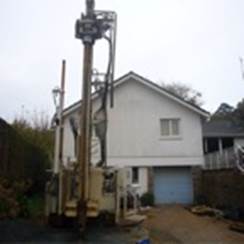
Longer loops will draw more warmth from the ground, but they need more space. If you have enough room in your garden, the loop can be buried underground in a horizontal trench. However, if you don’t have a big enough area in which to do this, another option is to lay the pipe in a series of vertical boreholes instead. These reach much deeper into the ground.
The space you need in order to install a horizontal loop of pipe or the depth you have to dig down for a borehole will depend on a variety of factors. We as the heat pump installer will ensure that the design of your system meets the heat requirements of your home and is suitable for the local conditions.
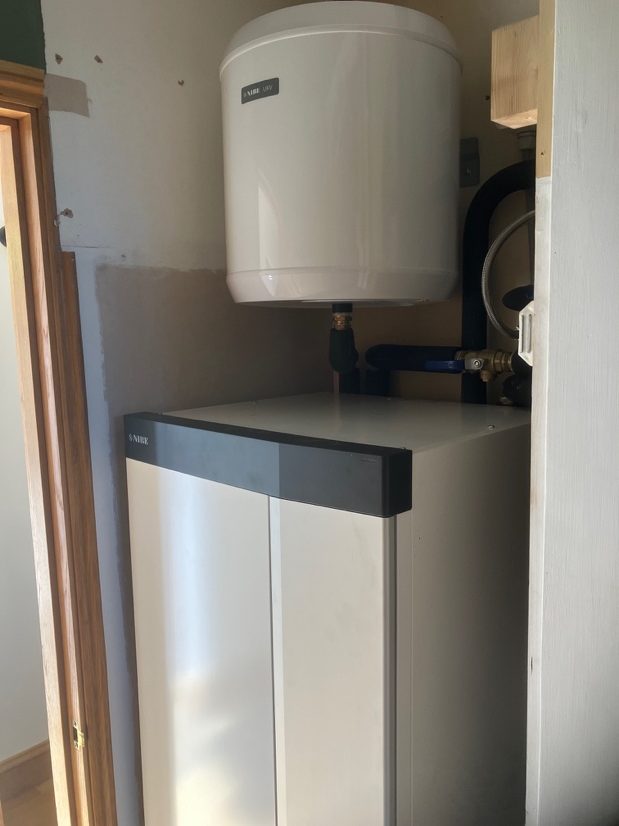
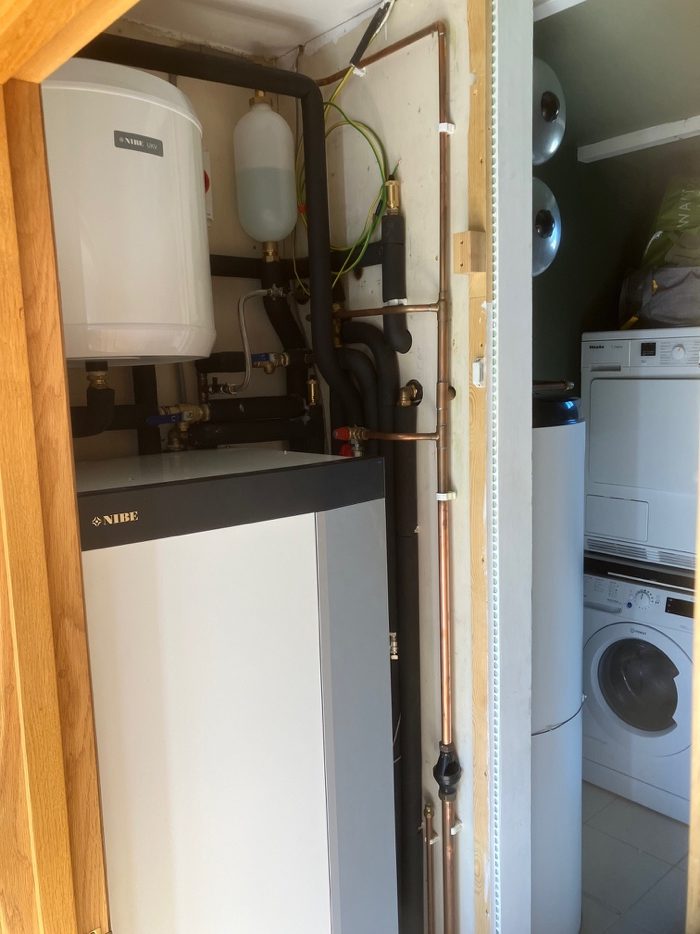
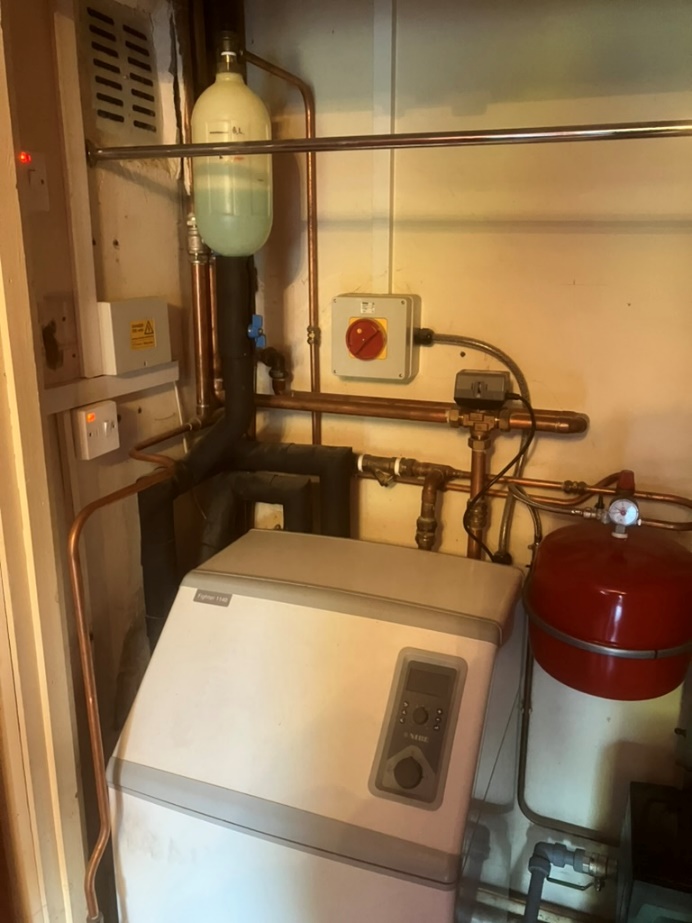
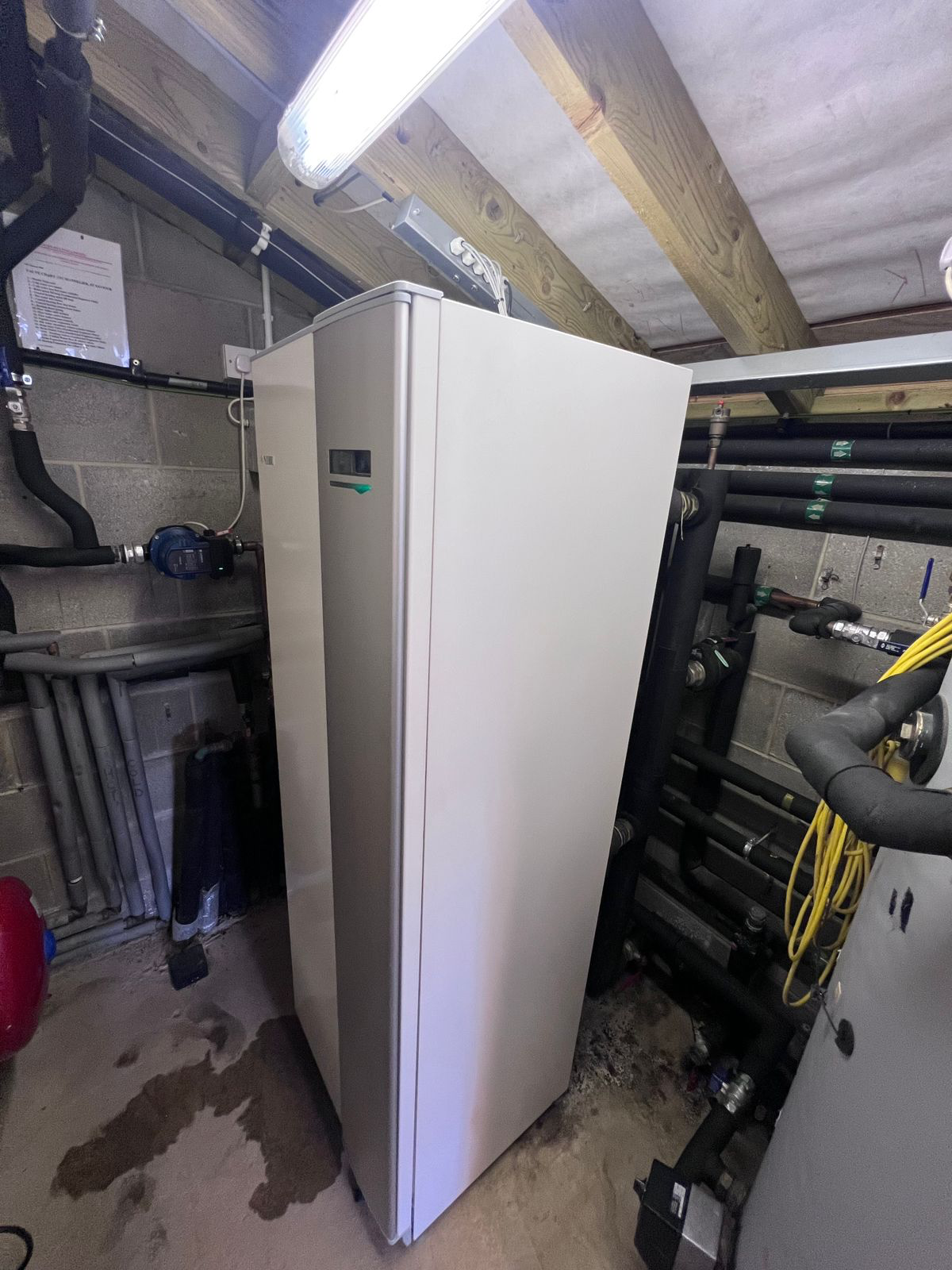
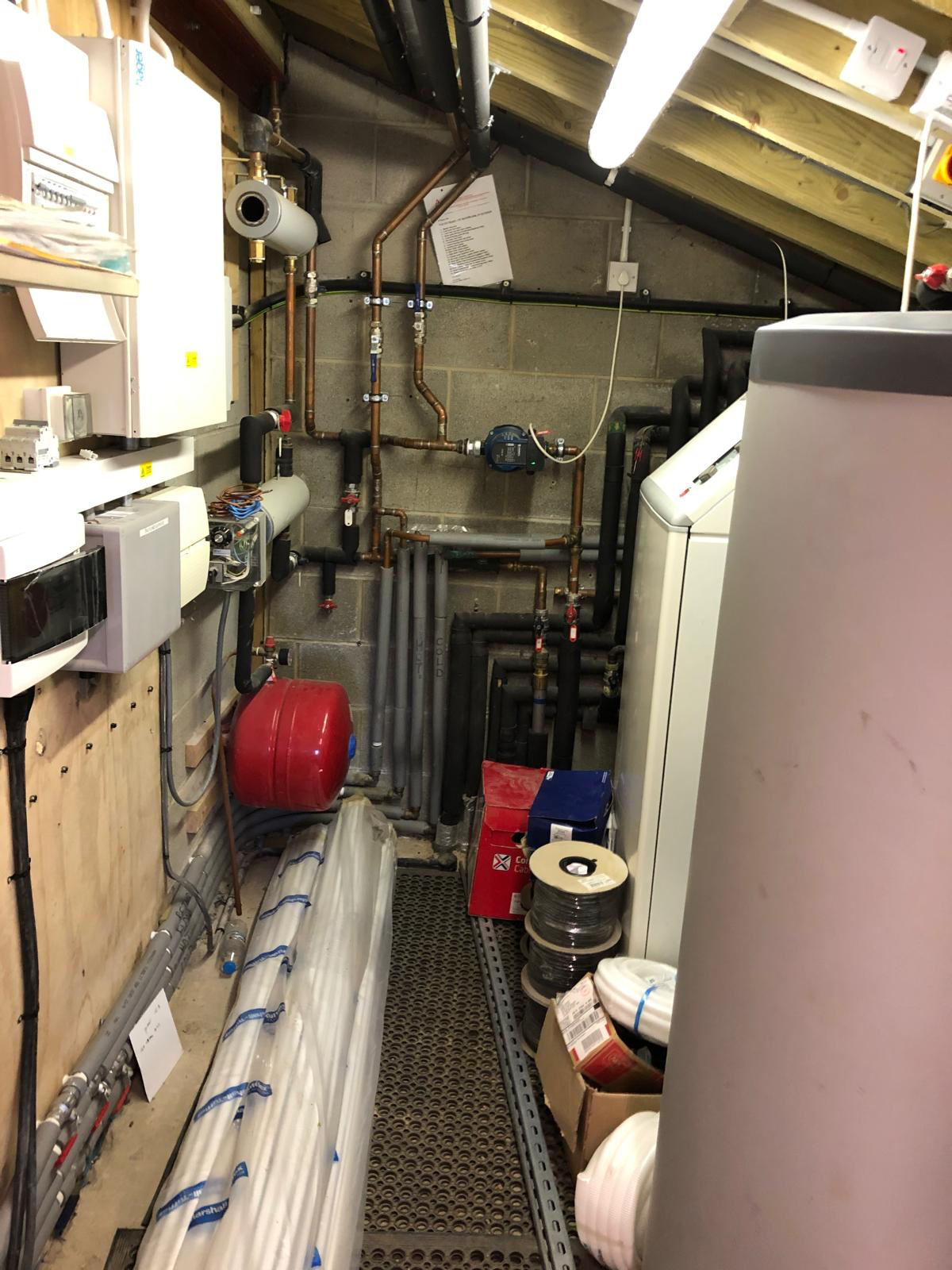
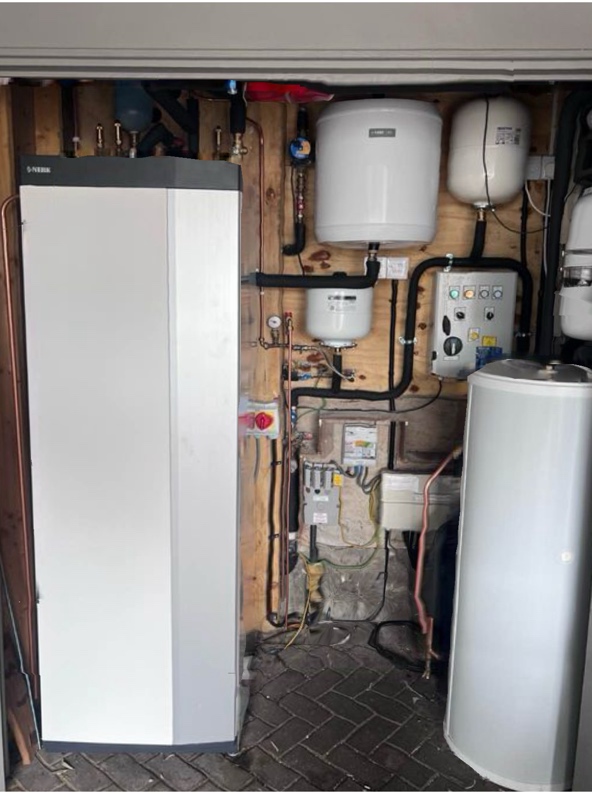
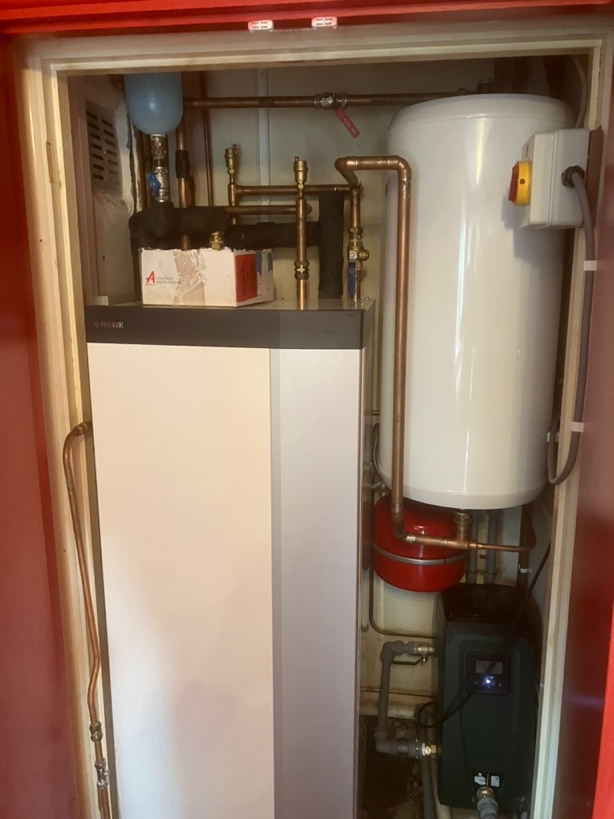
As the antifreeze mixture travels through this loop, it picks up heat from the ground. This energy is then passed through a heat exchanger into a heat pump. These pumps work like a refrigerator, but in reverse. They take the energy that has come from the ground and transfer it into your home. Particularly environmentally responsible systems are now available that run these heat pumps using power generated on site by renewable sources such as photovoltaic solar panels, meaning they don’t have to rely on mains energy.
Geothermal solutions that also provide a cooling function simply work in reverse during spells of hot weather, transferring heat energy from the home into the cooler ground and making your living environment more comfortable as a result.
There are several types of ground loop systems, each suited to different site conditions:
Installed in shallow trenches, these require more land and are typically used for residential or small commercial properties
Drilled deep into the ground, these are ideal for locations with limited space and are commonly used in urban settings
Utilize nearby water bodies for heat exchange, offering an efficient solution where water resources are available
What it means: SCOP is a measure of a heat pump’s seasonal efficiency. A higher SCOP means the system is more energy-efficient over an entire heating and cooling season.
Typical range: While a SCOP of 3.5 or higher is considered good, many geothermal systems operate even more efficiently, with values between 3.0 and 5.5 Being Common.
Why geothermal is efficient: Geothermal heat pumps are more efficient than air-source pumps because they use the stable underground temperature to transfer heat, which allows them to maintain their performance even as outside air temperatures fluctuate dramatically.
Energy savings: Due to their high efficiency, geothermal systems can lead to significant operational savings and reduced energy consumption compared to conventional systems.