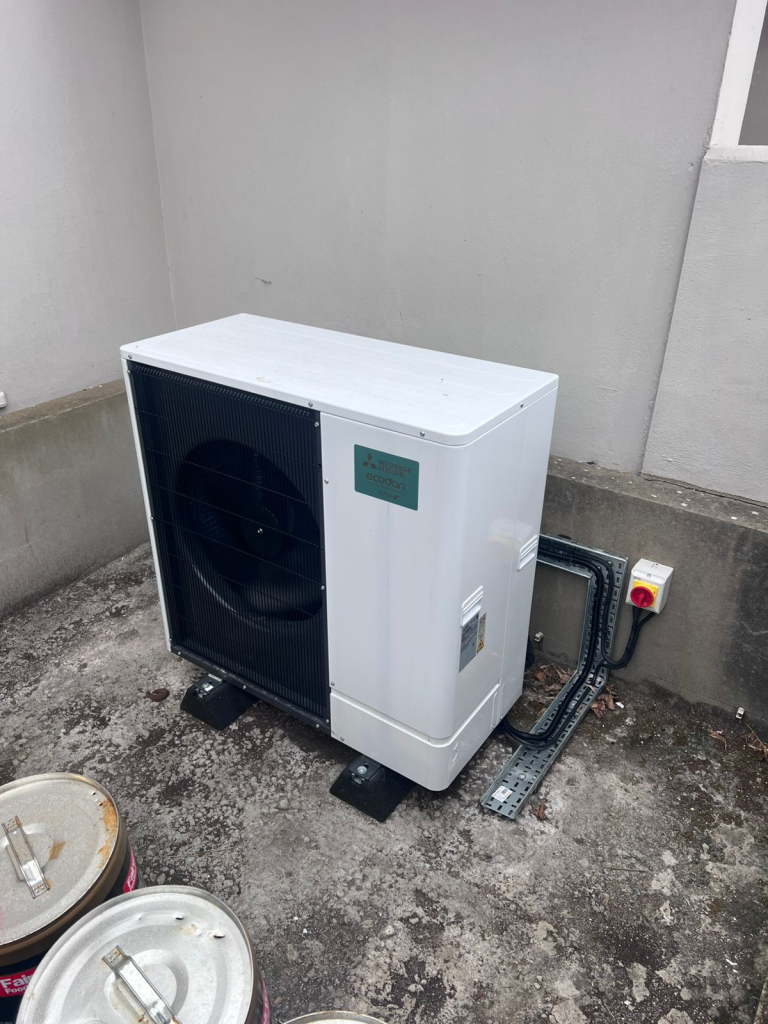
Installing modern heating and plumbing technologies such as hot water heat pumps, air source and geothermal heat pumps, and exhaust air heat pumps significantly reduces reliance on fossil fuels. These systems extract naturally occurring heat from the air, ground, or outgoing ventilation, enabling highly efficient heating and hot water production. Their reduced energy consumption translates directly into lower carbon emissions, supporting cleaner, more sustainable homes and businesses.
Complementary technologies such as solar thermal systems and heat pump cylinders further enhance overall efficiency. Solar energy provides a renewable, zero-emission source of heat that can be used for domestic hot water or to assist space heating. Heat pump cylinders store energy more effectively, ensuring that renewable heat is used as efficiently as possible and reducing unnecessary power demand during peak times.
Mechanical Heat Recovery Systems (MVHR) also contribute meaningfully to environmental performance by capturing heat from stale outgoing air and using it to warm fresh incoming air. This reduces the need for additional heating, conserves energy, and improves indoor air quality. In well-insulated buildings, MVHR systems can dramatically cut heating loads while maintaining a healthy, comfortable living environment.
Beyond heating, rainwater harvesting systems help reduce pressure on mains water supplies by collecting and reusing rainwater for non-potable uses such as flushing toilets, irrigation, and cleaning. By lowering household water consumption, these systems minimise strain on local resources and decrease the energy required for water treatment and distribution. Together, these technologies provide a holistic approach to lowering environmental impact while enhancing long-term efficiency and sustainability.